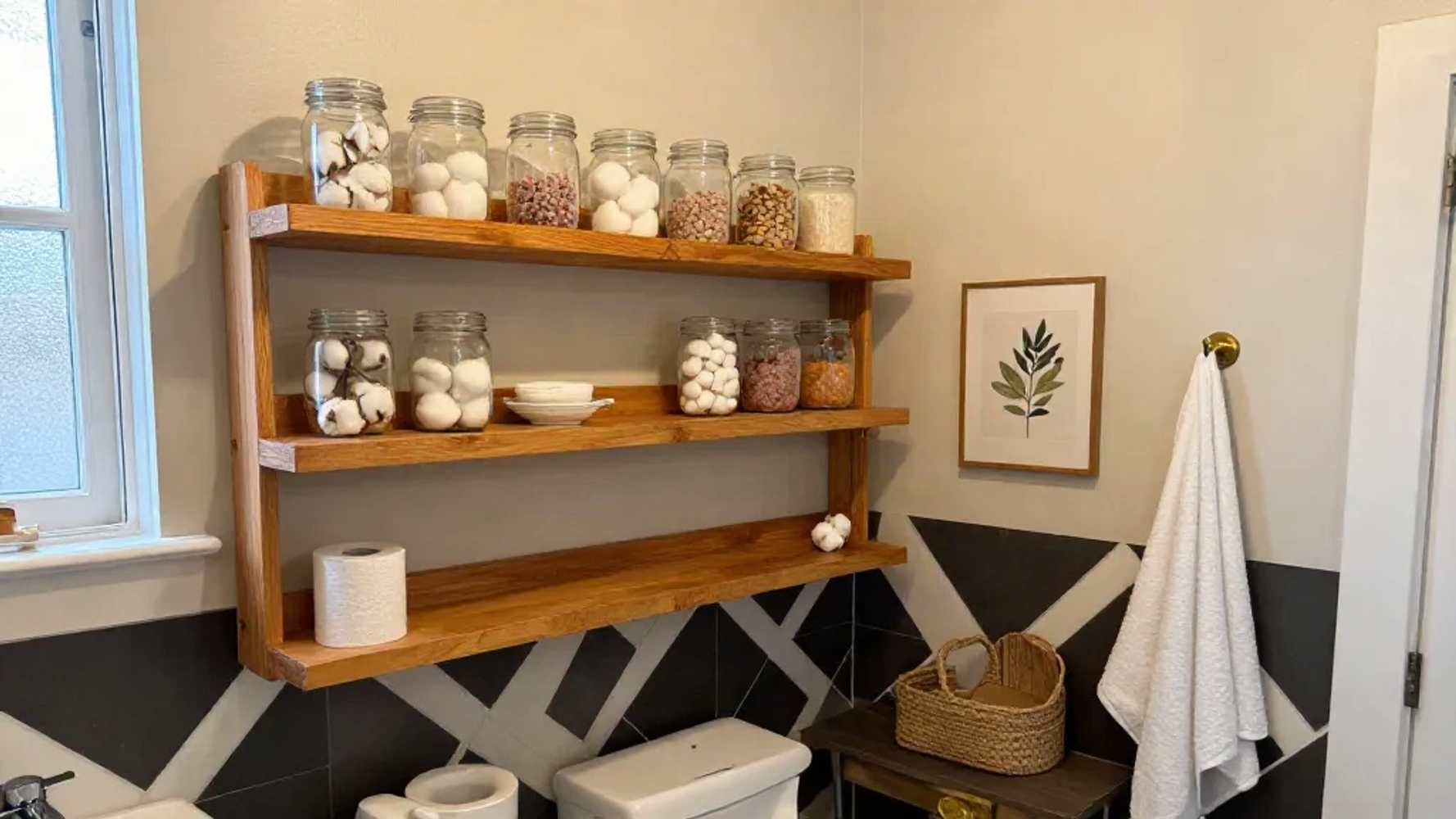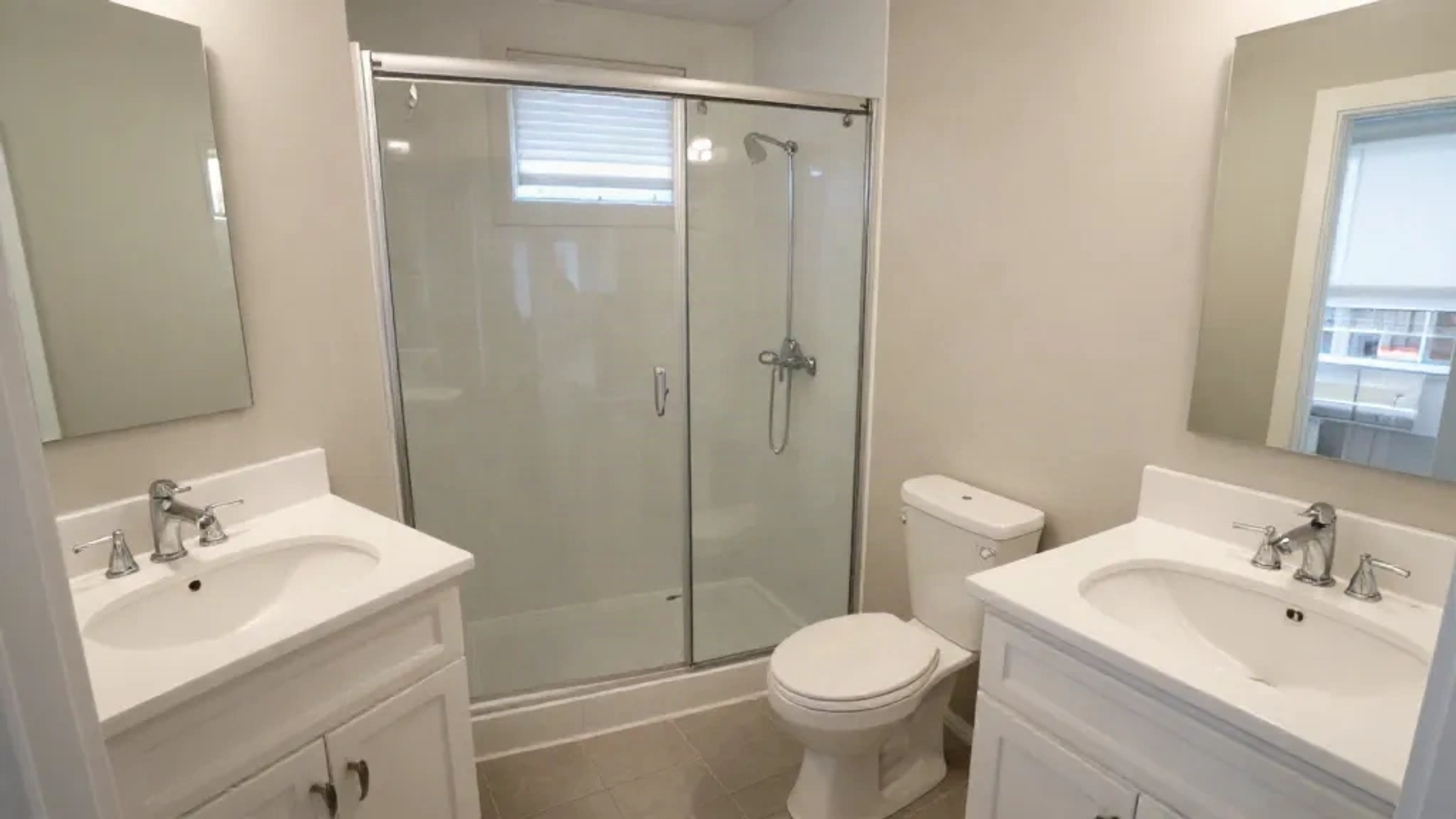
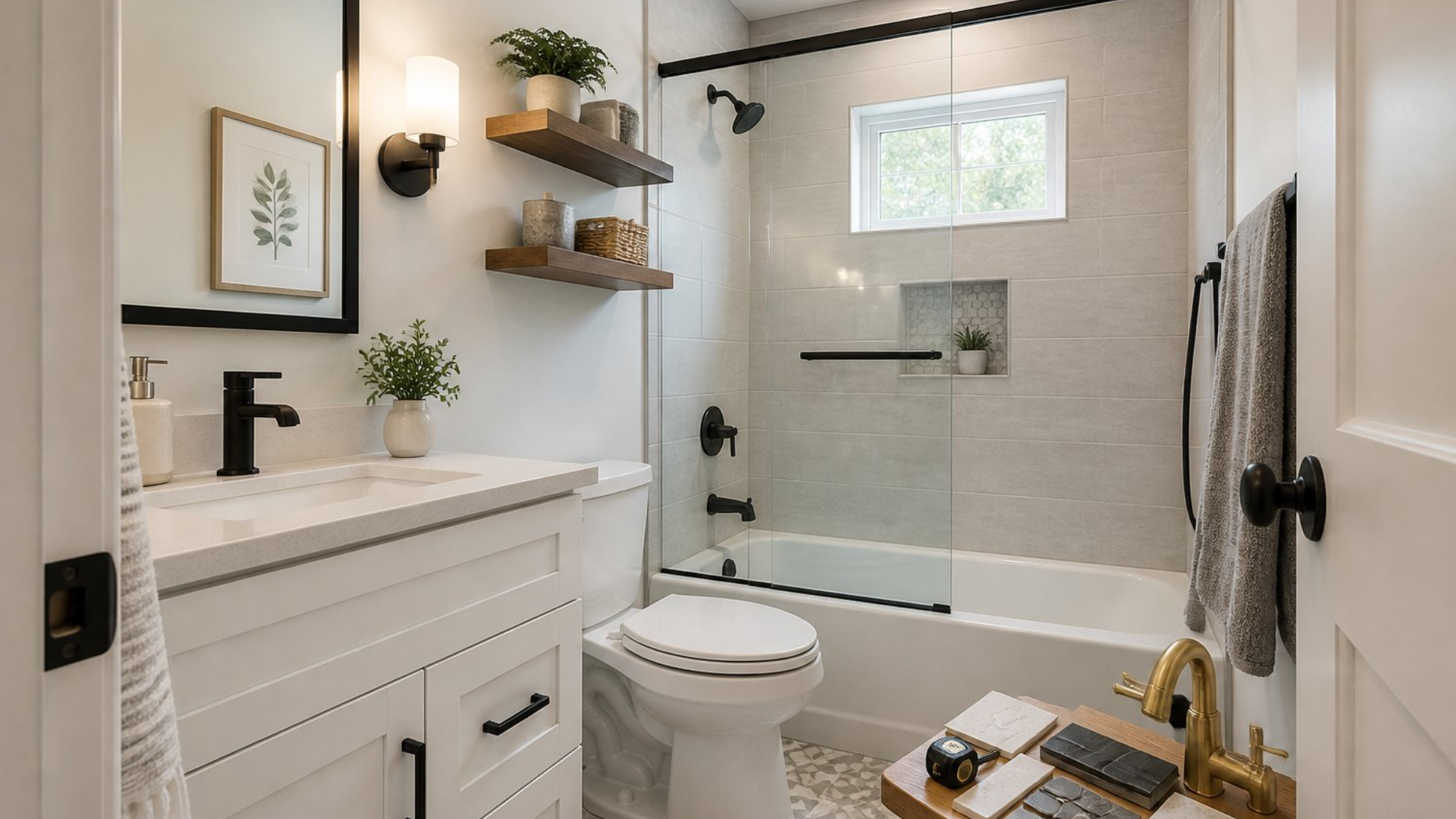
As a homeowner, sometimes you catch yourself wanting to make improvements to your house, but not wanting to spend an arm and a leg. A bathroom upgrade can be one of the biggest enhancements that can also have a large ROI. One area to consider is if you have a small bathroom. A small bathroom remodel can typically run anywhere from $5,000 to $15,000, with many projects landing between $7,000 and $12,000. Your total depends on the bathroom’s size, material quality, labor rates, plumbing conditions, and whether you keep the existing layout.
Small spaces can still require extensive work because fixtures and trades remain concentrated in one area. You’ll see how costs break down by project type, square footage, layout changes, existing conditions, materials, and DIY work.
Your ZIP code also affects labor and permit costs. The Advistra Small Bathroom Remodel Cost Calculator helps you compare low, expected, and high estimates based on your location, bathroom details, project scope, and material choices.
Related: https://www.myadvistra.com/blog/15-unique-diy-small-bathroom-ideas-youll-love
How Much Does a Small Bathroom Remodel Cost?
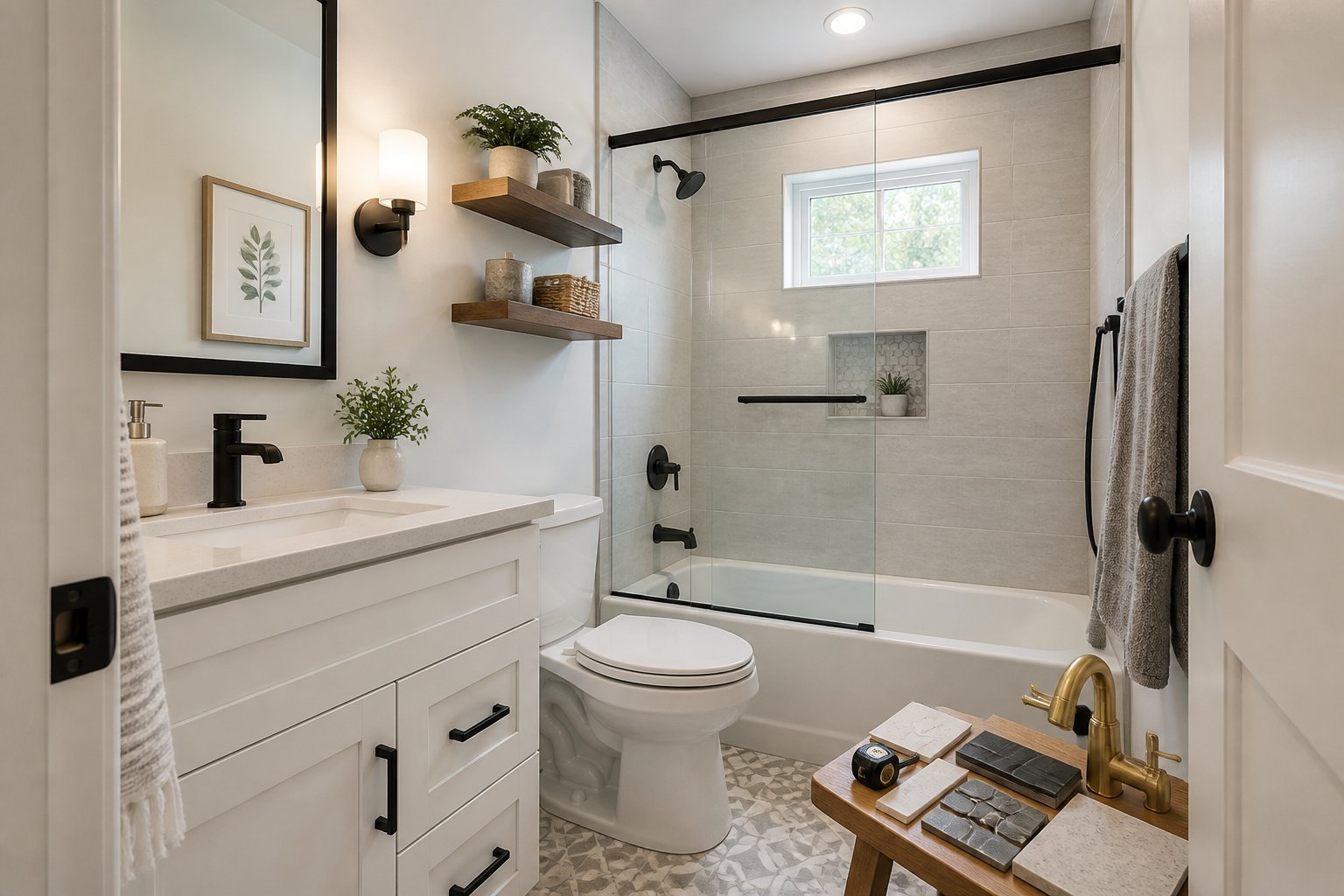
A small bathroom remodel typically costs between $6,500 and $18,000 in 2026, with most standard projects landing around $10,500. Minor cosmetic updates can start as low as $3,500, while a full tear-out with plumbing relocation or custom tile surrounds can exceed $25,000. Total costs depend on room dimensions, fixture quality, and whether the plumbing footprint stays in place.
Remodel type | Typical cost |
|---|---|
Cosmetic updates | $3,000–$7,000 |
Mid-range renovation | $7,000–$15,000 |
Full-gut remodel | $15,000–$35,000+ |
Many estimates fall between $115 and $300 per square foot, although some projects reach $500 per square foot when you select high-end materials or extensively change the layout. Labor, materials, permits, disposal, and regional pricing affect your final estimate.
You can usually control costs by keeping the existing layout, repairing rather than replacing sound plumbing, and choosing standard-size fixtures. Moving a toilet, shower, or sink often increases the budget because the work may require new supply lines, drains, flooring, and permits.
When using a small bathroom remodel cost calculator, enter the room’s dimensions, project type, finish quality, fixture changes, and labor rates in your area. Add a contingency of about 10% to 20% for concealed water damage, outdated wiring, subfloor repairs, or other issues discovered during demolition.
Ready to estimate your project?
See what your bathroom remodel could cost based on your ZIP code and project scope.
What Counts as a “Small Bathroom”?
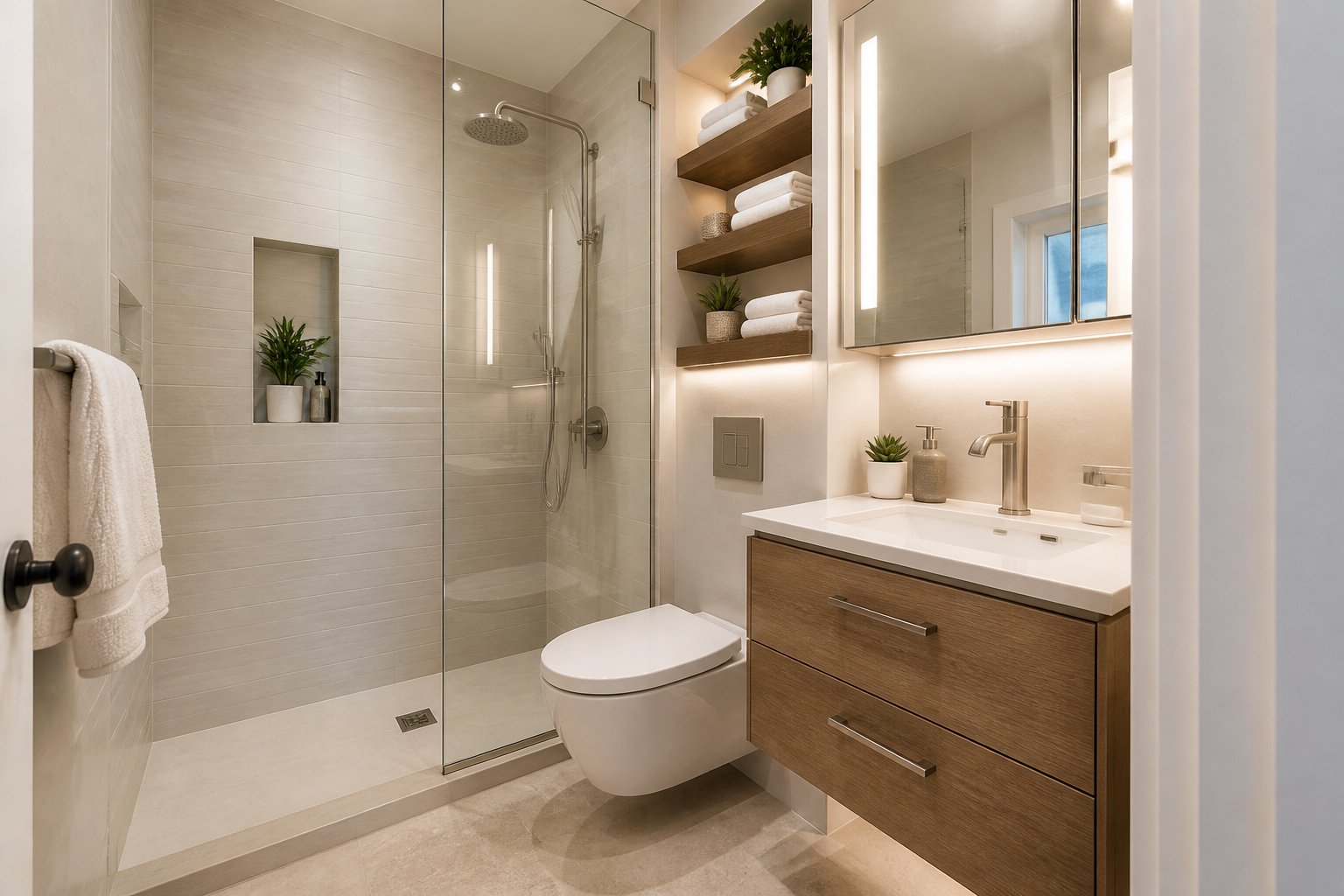
A small bathroom typically measures about 35 to 50 square feet, such as a 5-by-7- or 5-by-8-foot room. Some bathrooms with up to 60 square feet may still qualify as small if they have a tight layout or limited storage.
For a remodel cost calculator, classify your bathroom by both floor area and project scope:
Bathroom type | Common features |
|---|---|
Powder room | Toilet and sink; no shower or tub |
Three-quarter bath | Toilet, sink, and shower |
Full small bathroom | Toilet, sink, and tub or shower |
Compact primary bath | Full fixtures with limited clearance or storage |
Measure the room’s length and width, then multiply those figures to calculate square footage. Exclude areas outside the bathroom, but include space occupied by fixtures, cabinets, and built-ins.
Room size affects flooring, paint, tile, and installation quantities. However, fixture locations often influence your budget more than floor area. Keeping the toilet, sink, tub, or shower in place usually costs less than moving plumbing lines or changing the room’s layout.
Why Small Bathrooms Can Cost More Than You Expect
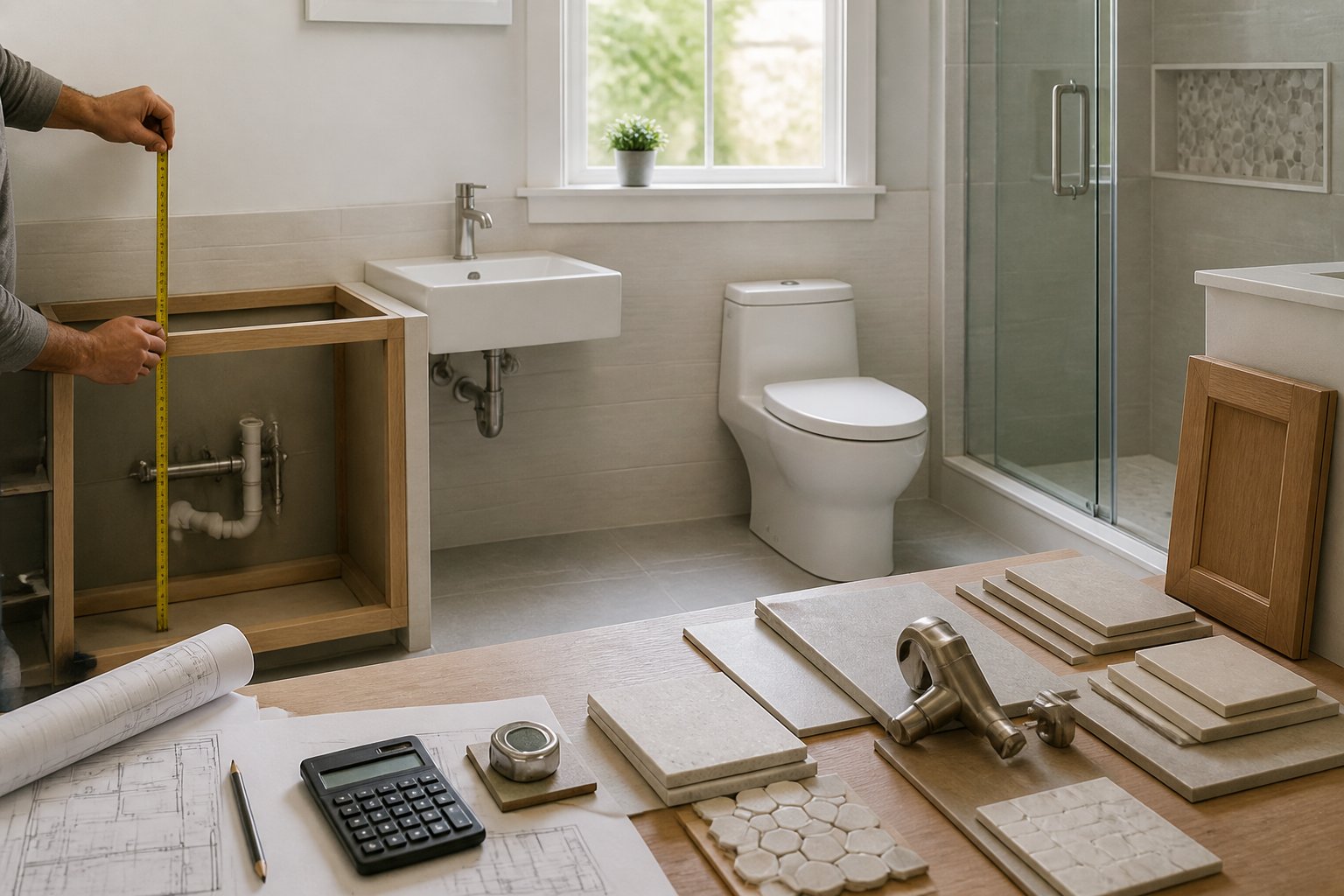
A small footprint limits the amount of material you need, but it does not eliminate essential labor, permits, fixtures, or skilled trades. Plumbing layout, electrical upgrades, and shower or tub installation can create substantial fixed costs even when the room measures only 35 to 60 square feet.
Plumbing Doesn't Scale Perfectly With Square Footage
Your plumbing costs depend more on the number and location of fixtures than on floor area. A toilet, sink, shower, or tub each requires supply lines, drain connections, shutoff valves, and testing. Moving any fixture can require demolition, new piping, subfloor repairs, and professional labor.
Keeping the existing layout usually gives you the most predictable estimate. Relocating a toilet may require changes to the drain line, while moving a shower can involve both water lines and a larger drain assembly. Older homes may also need corroded pipes, outdated valves, or damaged subflooring replaced before the new fixtures go in.
When using a small bathroom remodel cost calculator, enter layout changes separately from fixture replacement. A calculator that assumes a simple fixture swap may understate costs if you plan to change the room’s plumbing configuration.
Electrical Work Has Fixed Costs
Electrical upgrades often include costs that remain similar regardless of bathroom size. Your contractor may need to install or update a dedicated circuit, ground-fault circuit interrupter (GFCI) protection, switches, outlets, exhaust-fan wiring, and lighting connections. An electrician must also inspect existing wiring and bring unsafe work up to code.
Adding a recessed light, vanity lighting, heated flooring, or a combination fan-light can increase labor and permit requirements. Access affects the price as well. If wiring runs through finished walls or ceilings, the project may require additional cutting, patching, and painting.
Budget for the electrical scope rather than estimating by square foot. One outlet and one light may cost less than a complete upgrade, but both projects still involve setup, travel, testing, and code-compliant installation.
Shower and Tub Work Can Dominate the Budget
A shower or tub often represents one of the largest portions of a small bathroom renovation. The work may include demolition, waterproof backer board, a shower pan or tub, plumbing fixtures, wall tile, grout, sealant, and glass or curtain hardware. These components require careful installation because leaks can damage framing and flooring.
Related:
https://www.myadvistra.com/blog/tub-to-shower-conversion-kit-guide
https://www.myadvistra.com/blog/tub-to-shower-conversion-cost-in-2026-price-breakdown-calculator
A prefabricated shower surround generally costs less and installs faster than a fully tiled enclosure. Custom tile increases material and labor costs, especially when you choose intricate patterns, niche shelving, multiple tile sizes, or a frameless glass door. Replacing a tub with a walk-in shower can also require drain adjustments and subfloor preparation.
For a more realistic calculator estimate, select the enclosure type, wall finish, fixture quality, and whether you will keep the existing tub or shower location.
Small Bathroom Remodel Cost Per Square Foot: Is It Useful?
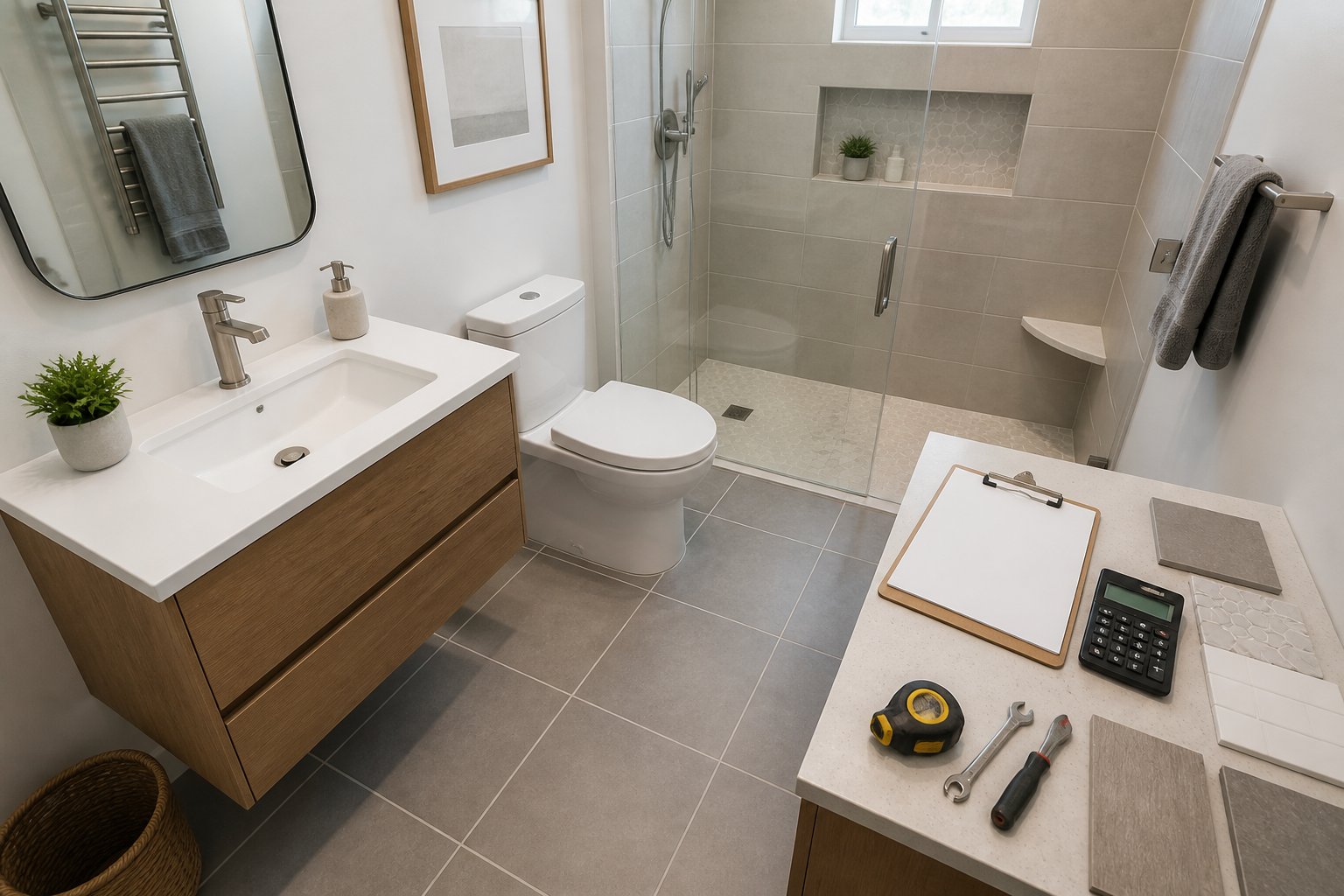
In 2026, remodeling a small bathroom typically costs $150 to $350 per square foot, with high-end or custom renovations reaching $450 to $600 per square foot.
Because essential fixed expenses—licensed plumbing rough-ins, electrical wiring, waterproofing, and fixture installation—are concentrated in a tight 35- to 50-square-foot footprint, small bathrooms often carry a significantly higher cost per square foot than larger master suites.
Project scope | Approximate total cost |
|---|---|
Cosmetic update | $1,500–$6,000 |
Partial remodel | $3,000–$12,000 |
Full remodel | $6,000–$20,000+ |
Use the per-square-foot figure to create an initial range, then adjust it for the work your bathroom needs. Replacing tile and fixtures costs less than moving a toilet, enlarging a shower, or changing plumbing lines.
Your estimate should also separate materials, labor, permits, and contingency funds. A calculator that includes these categories will usually produce a more useful budget than one based only on room size.
How Your Existing Bathroom Changes the Estimate
Your bathroom’s current condition can shift a calculator’s estimate significantly. A room with sound plumbing, a level subfloor, and usable walls usually costs less than one requiring repairs before installation begins.
Existing condition | Possible cost effect |
|---|---|
Same layout and working plumbing | Keeps labor and plumbing costs lower |
Damaged subfloor or wall framing | Adds demolition and structural repair |
Outdated wiring or weak ventilation | May require electrical or ventilation upgrades |
Water damage, mold, or leaks | Increases remediation and repair costs |
Difficult access to the work area | Can raise labor and disposal costs |
Keeping the toilet, shower, and vanity in their current locations can help control your budget. Moving these fixtures often requires new supply lines, drains, wall repairs, permits, and additional labor.
Your calculator should also account for demolition. Removing tile, a fiberglass surround, built-in cabinets, or multiple layers of flooring takes more time than replacing surface finishes. If you handle limited demolition yourself, confirm local requirements and avoid disturbing plumbing or electrical components.
Older homes may need code-related updates, such as a grounded circuit, GFCI protection, shutoff valves, or improved exhaust ventilation. Enter these items as separate allowances rather than assuming the existing systems can support the remodel.
How Much Does a Small Bathroom Remodel Cost If You Change the Layout?
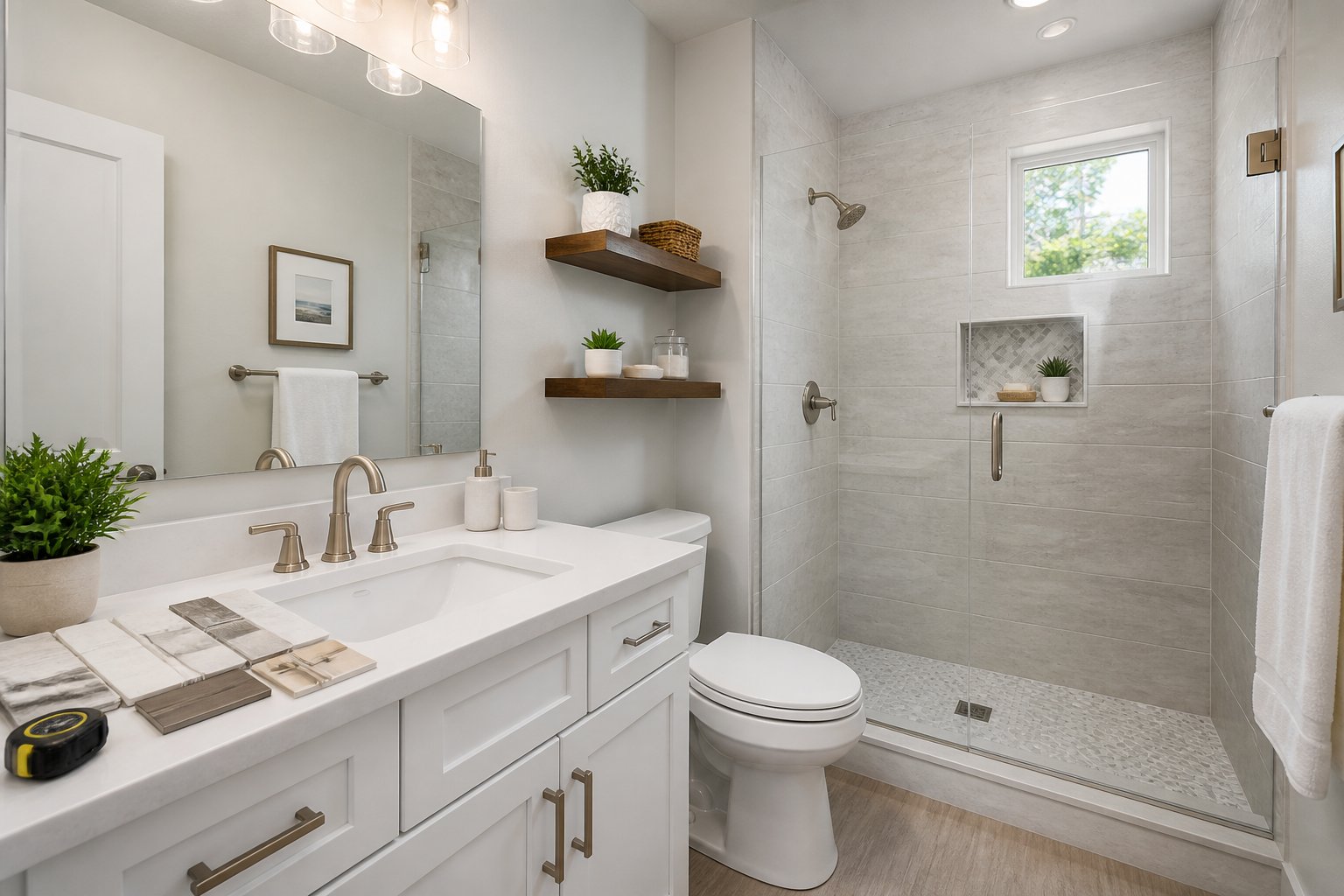
Changing the layout usually costs $10,000 to $25,000 or more for a small bathroom. You may pay less for minor fixture adjustments, while moving plumbing, electrical wiring, walls, or the toilet can push the project toward the higher end.
Layout change | Typical added cost |
|---|---|
Move a vanity or light fixture | $500–$2,000 |
Relocate a shower or tub | $1,500–$5,000 |
Move a toilet | $2,000–$5,000 |
Remove or build a wall | $1,000–$4,000 |
Reconfigure most of the bathroom | $10,000–$25,000+ |
Your calculator should include demolition, new plumbing lines, electrical work, framing, permits, waterproofing, flooring, and finish materials. A layout change also requires more labor than a cosmetic remodel because contractors must open walls or floors and repair the affected surfaces.
Keeping fixtures near existing supply and drain lines can reduce costs. Moving them across the room or changing the bathroom’s footprint generally requires more pipework, patching, and inspection time.
Add a 10% to 20% contingency for hidden water damage, outdated wiring, uneven subfloors, or code-related upgrades. A full gut remodel with major layout changes commonly reaches $15,000 to $35,000 or more, depending on local labor rates and material selections.
How Much Does It Cost to Remodel a Small Bathroom Yourself?
A DIY small bathroom remodel typically costs $2,000 to $8,000 for materials, tools, permits, and waste disposal. You may spend less for cosmetic updates, while projects involving new plumbing, electrical work, or a full replacement can approach professional remodel prices.
Project scope | Estimated DIY cost |
|---|---|
Paint, fixtures, and accessories | $500–$2,000 |
Vanity, flooring, and lighting | $1,500–$4,000 |
Tile, toilet, vanity, and fixtures | $3,000–$7,000 |
Full gut remodel | $5,000–$12,000+ |
You can reduce labor costs by handling demolition, painting, installation of accessories, and some flooring work yourself. Materials still account for much of the budget, including tile, backer board, waterproofing, plumbing fixtures, cabinetry, lighting, and trim.
Use a calculator that includes 10% to 20% for unexpected costs. Old plumbing, water damage, uneven subfloors, permit requirements, and code-related upgrades can increase the final bill.
Avoid doing electrical, plumbing relocation, or waterproofing work beyond your skill level. Local regulations may require permits or licensed contractors, and mistakes behind walls or beneath tile can lead to expensive repairs. Get material quotes before work begins, then compare your DIY total with local labor estimates.
Small Bathroom Remodel Cost Examples
Use these examples to set a practical budget before requesting contractor quotes. Your final price will depend on bathroom size, material quality, local labor rates, permits, and whether you move plumbing.
Project scope | Typical cost range |
|---|---|
Cosmetic update: paint, fixtures, and accessories | $1,500–$3,000 |
Standard remodel: vanity, flooring, tile, and fixtures | $3,500–$8,000 |
Full renovation: new tile, shower or tub, vanity, and toilet | $6,000–$12,000 |
Full gut remodel with plumbing changes | $8,000–$15,000+ |
For a 40- to 50-square-foot bathroom, a standard remodel may cost $3,500–$8,000. Keeping the existing layout, selecting midrange finishes, and reusing serviceable plumbing can help you stay near the lower end.
A tub-to-shower conversion usually costs more than a cosmetic update because it may require waterproofing, new wall surfaces, glass, and plumbing work. If you choose premium tile, custom cabinetry, or structural changes, your estimate can exceed $15,000.
Small bathrooms often have a higher cost per square foot than larger spaces. Fixed expenses such as permits, demolition, delivery, and plumbing work still apply even when the room has limited floor area.
What Can Make a Small Bathroom Remodel More Expensive?
A small footprint does not always mean a low project cost. Labor, plumbing access, material quality, and project scope often affect your budget more than the room’s square footage.
Cost driver | Why it increases the price |
|---|---|
Layout changes | Moving a toilet, sink, or shower may require new plumbing and flooring work. |
Full demolition | Removing tile, drywall, fixtures, or damaged subfloor adds labor and disposal fees. |
Custom features | Built-in storage, frameless glass, niche shelving, and custom cabinetry require more installation time. |
Premium materials | Natural stone, designer tile, specialty fixtures, and custom hardware raise material costs. |
Electrical upgrades | New lighting, ventilation, outlets, or a heated floor may require rewiring or panel work. |
Structural repairs | Water damage, mold, outdated wiring, or deteriorated subfloor can add unexpected work. |
Permits and local labor rates also influence your estimate. A straightforward cosmetic update may cost about $3,000, while a partial renovation commonly reaches $8,000–$15,000. A full gut renovation with layout changes can exceed $15,000, especially when you select high-end finishes.
Your material choices can create smaller cost increases that add up quickly. For example, intricate tile patterns require more cutting and installation time, while replacing a standard vanity with a custom unit may involve additional carpentry and fitting work. Include a 10%–20% contingency in your calculator for concealed damage and other changes discovered after demolition.
What Can Make a Small Bathroom Remodel Less Expensive?
Preserve the existing plumbing footprint: Keeping your toilet, sink drain, and shower valves in their current locations avoids $2,500 to $5,500 in subfloor trenching and pipe relocation.
Choose a prefabricated shower surround: Installing a high-quality acrylic or fiberglass surround saves $1,500 to $3,000 compared to custom tile installation and multi-layer waterproofing labor.
Install a standard-dimension stock vanity: Selecting a pre-assembled 24-inch or 30-inch vanity with an integrated countertop costs 50% to 70% less than custom cabinetry and separate stone fabrication.
Opt for luxury vinyl tile (LVT) flooring: Modern waterproof LVT offers superior moisture resistance and durability at 40% lower material and installation labor costs than porcelain or natural stone tile.
Tackle non-structural demolition yourself: Safely removing the old vanity, mirror, accessories, and baseboards yourself can shave $500 to $1,200 off contractor labor charges before the trades arrive.
Cost-saving choice | Potential benefit |
|---|---|
Refinish the tub or vanity | Avoids full replacement |
Keep the current floor plan | Reduces plumbing and construction labor |
Use stock fixtures | Costs less than custom or specialty products |
Install tile selectively | Limits material and installation costs |
Compare contractor quotes | Helps you identify competitive labor rates |
Why Your ZIP Code Matters
Your ZIP code helps a bathroom remodel cost calculator adjust for local labor rates, material pricing, permit fees, and disposal costs. A small bathroom may require similar work in any region, but the hourly rates and project expenses can differ substantially between markets.
Local housing conditions also affect pricing. Older homes may need plumbing, electrical, ventilation, or structural updates before you install new fixtures and finishes. A calculator that accounts for regional construction patterns can produce a more useful starting range than a national average.
Local factor | Potential cost impact |
|---|---|
Contractor labor rates | Changes installation costs |
Permit requirements | Adds application and inspection fees |
Material availability | Affects delivery and product prices |
Housing age | May reveal code or system upgrades |
Disposal charges | Varies by local waste regulations |
Enter your ZIP code along with the bathroom size, project scope, and finish quality. A cosmetic update usually costs less than a renovation involving relocated plumbing, new wiring, waterproofing, or custom tile work.
Use the result as a planning estimate, not a contractor quote. Local bids can still vary based on access, site conditions, product selections, and the contractor’s workload.
Why Advistra Gives You a Low, Expected, and High Estimate
Bathroom remodeling costs vary because your choices affect labor, materials, permits, and the amount of work behind the walls. Advistra shows three estimates so you can plan for different project conditions instead of relying on one fixed number.
Estimate | What it represents |
|---|---|
Low | A modest update with standard materials, limited repairs, and minimal layout changes |
Expected | A typical professional remodel using midrange finishes and common installation requirements |
High | Premium materials, extensive repairs, difficult access, or plumbing and electrical changes |
Your bathroom’s size matters, but it does not determine the budget by itself. A small bathroom can cost more than expected if you move fixtures, replace damaged subflooring, update outdated wiring, or discover mold during demolition.
The calculator also accounts for major cost categories, including fixtures, tile, vanity work, plumbing, labor, and permits. You can use the range to compare contractor bids and identify which decisions have the greatest effect on your projected cost.
Include a contingency for concealed problems and scope changes, especially in older homes. The estimate supports planning and quote comparisons, while a contractor’s on-site assessment should confirm the final price.
Get a Personalized Estimate
Use a small bathroom remodel cost calculator to create a planning budget based on your project’s actual details. Enter the bathroom size, renovation scope, finish level, fixture choices, labor preference, and location when those fields are available.
Detail to enter | Why it affects cost |
|---|---|
Bathroom size | Influences tile, flooring, paint, and labor quantities |
Layout changes | Adds plumbing, electrical, demolition, and permitting work |
Fixtures and vanity | Prices vary by style, quality, and installation requirements |
Tile and finishes | Material choice and installation complexity change the budget |
Labor region | Contractor rates differ by location |
Contingency | Covers hidden damage, code updates, and changes during construction |
Choose the scope that best matches your plans: a cosmetic refresh, a standard renovation, or a full remodel. Keeping the existing toilet, shower, and sink locations can reduce plumbing costs, while moving them may require additional labor and permits.
Add a 10%–20% contingency for older bathrooms or projects involving demolition. Treat the calculator’s result as a planning range, then compare it with written estimates from licensed contractors before starting work.
Ready to estimate your project?
See what your bathroom remodel could cost based on your ZIP code and project scope.
Final Takeaway
Use a small bathroom remodel cost calculator to set a realistic planning range before requesting contractor bids. Enter your bathroom size, project scope, finish level, location, and any plumbing or electrical changes for a more useful estimate.
Budget factor | Usually increases cost |
|---|---|
Layout | Moving toilets, showers, or drains |
Finishes | Premium tile, stone, fixtures, and custom cabinetry |
Labor | Complex installation or limited access |
Project conditions | Water damage, outdated wiring, or structural repairs |
Treat the calculator’s result as a planning estimate, not a fixed price. Add a contingency of about 10%–20% for concealed problems and changes that arise after demolition.
You can reduce expenses by keeping the existing layout, choosing readily available materials, comparing multiple quotes, and handling suitable preparation or finishing work yourself. Confirm permit requirements and request itemized bids that separate materials, labor, plumbing, electrical work, disposal, and taxes.
Frequently Asked Questions
How much does it cost to remodel a 5x8 small bathroom?
Remodeling a standard 5x8 bathroom (40 square feet) typically costs between $7,500 and $16,000 in 2026. A simple cosmetic refresh (new vanity, faucet, toilet, paint, and hardware) runs $3,500 to $6,500, while a complete mid-range gut renovation with a new tub/shower surround averages $11,000 to $15,000.
Related: how much a 5x10 bathroom remodel costs
Can you remodel a small bathroom for $5,000?
Yes, you can remodel a small bathroom for $5,000, but the scope must remain strictly cosmetic. A $5,000 budget covers replacing the vanity and sink, installing a new toilet, updating light fixtures and mirrors, fresh moisture-resistant paint, and laying luxury vinyl tile over the existing subfloor, provided you retain existing plumbing locations and shower tile.
What is the most expensive part of a small bathroom remodel?
The wet area—the shower or tub enclosure—is the most expensive component of a small bathroom remodel, accounting for 30% to 45% of the total budget. Waterproofing membranes, cement backer board, plumbing rough-in valves, custom tile installation, and glass doors drive the highest material and labor costs.
How long does a small bathroom remodel take?
A small bathroom remodel typically takes 2 to 4 weeks of active construction. Cosmetic updates can wrap up in 3 to 5 days, while a full gut renovation involving licensed plumbing inspections, tile curing, and custom glass fabrication usually spans 3 to 5 weeks from demolition to final walkthrough.